|
|
 |
 |
 |
 |
 |
 |
 |
 |
 |
 |
 |
 |
 |
 |
| Description
of Ahdaas (impurities, pl. of Hadas)
Which make Wuzu (ablution) Obligatory Ablution is not necessary except to the one to whom ritual impurity occurs. When a man performs ablution, he can pray as many times as he can so long as he does not cause ritual impurity. If something exudes from the urethra (opening for voiding urine) or anus, it necessitates the performance of fresh ablution. However the ablution is not rendered invalid in case of vomiting, bleeding or exudation of pus from a wound, exudation of fluid from the wound or abscess, as opposed to the urethral opening or anus. In such instances, the affected part needs to be washed. Touching woman or kissing, touching
genital organs or seeing the parts does not necessitate ablution.
Neither eating, nor drinking water, nor touching wet or dried excreta
necessitates ablution, but washing the hands after such events is
recommended, the impure part has to be cleaned. The paring of nails,
combing the beard, or shaving the head does not render ablution
void. But it is proper to wash and cleanse the parts with water
in all such cases.
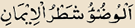
“Al wuzuo shatrul imaan.” - The Messenger of Allah has made urinating and defecation forbidden
in the following instances: |
|
Copyright
© 2004 Alavibohra.org All rights reserved. Vadodara. |
|